
Tuesday, January 26, 2010

Sunday, November 29, 2009
The Future of the Internet: Applications
FarmVille and MafiaWars! Just the names of the two Facebook applications that dominated my Live Feed (until I recently removed them) drive me crazy. The open platform that allows them to exist on Facebook also opened the gateway to other types of spam. In a recent NPR interview, former Facebook spammer, Dennis Yu, described several different ways people let spammers into their Facebook lives, simply by participating in applications. Yu explains:
Appvertising and spammers are just a few of the downsides to open platforms found on Facebook and MySpace before that. Identity theft, Phishing, and viruses have also become problems on these once mostly safe sites. Before Facebook opened its platform in 2007, there were only a select few Facebook created Applications for sharing photos, groups and events. Now, it seems like there is an application for everything, including those crazy addictive FarmVille type games. Some people would vote for a more sterile Facebook of the past, but others clearly enjoy the new offerings an open platform can bring, even if the bad comes along with the good.
This is the dilemma faced in Jonathan Zittrain's book, "The Future of the Internet -- and How to Stop It." Zittrain argues that the open platforms or Generative-ness of PCs and the Internet, while beneficial for their initial development and popularity, are now becoming more of a negative than a positive. In 2008, when his book was published, Zittrain noted that 90 percent of email was spam (p.99) and that 80 percent of it came from zombie computers sending it without their owners' knowledge (p.46) and nearly half of those computers were in North America. These are staggering statistics, and they are beginning to make people sit up at take notice. Last week I wrote about the prevalence viruses on Windows-based PCs, but according to Zittrain, the truth is that all personal computers are likely to be infected with some kind of virus, especially if they are hooked up to a constantly open Internet source like broadband or a T1 line.
The solution in the past has been to just throw more bandwidth at the spam problem, so that the email lines don't get so clogged that the relevant email can't get through (p.99). However, at some point that solution will not work any more, and then people will have to face the real problem: there are people exploiting the Generative nature of PCs and the Internet, and they're ruining it for everybody. People like Alan Ralsky, the self-proclaimed "King of Spam" and many even more malicious people have used the easily re-programmable nature of PCs and the Internet to not just make a profit, but to take advantage of and hurt people in the process. Although Ralansky was caught and punished, there are thousands more to take his place, and as more patches are made to the system, even more work around programs will be written.
For some, the solution to these problems is to just close the whole thing off and create tethered technologies. Tethered (or appliance) technologies like iTunes, TiVo, and XBoxes are not generative, meaning that they can not be changed or reprogrammed by the consumer, but must be used in the way the manufacturer intended (p.3). These technologies can be reprogrammed and often are, but only by the remote manufacturer. Tethered technologies still serve many useful functions, but they allow for less innovation and their content and functionality are not fully controlled by the user, even if the user has technically bought the product outright. This can of course lead to undesirable outcomes, like a service getting changed or canceled, and the user losing content or functionality that he or she already paid for.
Zittrain includes iPhones to the tethered technology list, but I disagree with him, since there are thousands of applications (written by third and fourth parties) that can be downloaded and added to iPhones, changing what they can do. Perhaps technologies like the iPhone could be the happy medium between too much freedom and too little. Apple does allow applications created by virtually anyone to be uploaded to their App Store. I say virtually, because although anyone can create and upload applications, they first have to pay to become a developer, and then go through online training to learn how to develop, and finally their applications have to pass standards before they can be added to the App Store. Except for the having to pay for the privilege part, this program seems to me to be a great solution to the programming woes of traditional generative technologies. In the Apple Application setting, programming is allowed and even encouraged, but standards have to be met, before new programs can be released to the general public. And, unlike Facebook, iPhone/iPod Touch users do not have to send applications all of their personal information in order to be able to download them. Apple's program may not be perfect, but I think it's on the right track.
"When a user clicks Accept, that they want to join, most of their profile information is now available. That can be used to create a very intense, addictive game, but it can also be used to [sic] advertising, and when you can use that data inside an ad to inject a user's name, their profile picture, the information of their friends, it creates highly relevant, highly targeted advertising, very smart ads. We can call them appvertising..."These "appvertisements" can now be opted out of by in-the-know users, but many of the less savvy users might be taken in by these targeted ads. The real trouble comes when spammers use the collected information to hack profiles. This has happened to several friends of mine, who suddenly send uncharacteristic comments, messages, or status updates wanting friends to go to certain websites. Luckily, these incidents can be mostly alleviated by changing passwords.
Appvertising and spammers are just a few of the downsides to open platforms found on Facebook and MySpace before that. Identity theft, Phishing, and viruses have also become problems on these once mostly safe sites. Before Facebook opened its platform in 2007, there were only a select few Facebook created Applications for sharing photos, groups and events. Now, it seems like there is an application for everything, including those crazy addictive FarmVille type games. Some people would vote for a more sterile Facebook of the past, but others clearly enjoy the new offerings an open platform can bring, even if the bad comes along with the good.
This is the dilemma faced in Jonathan Zittrain's book, "The Future of the Internet -- and How to Stop It." Zittrain argues that the open platforms or Generative-ness of PCs and the Internet, while beneficial for their initial development and popularity, are now becoming more of a negative than a positive. In 2008, when his book was published, Zittrain noted that 90 percent of email was spam (p.99) and that 80 percent of it came from zombie computers sending it without their owners' knowledge (p.46) and nearly half of those computers were in North America. These are staggering statistics, and they are beginning to make people sit up at take notice. Last week I wrote about the prevalence viruses on Windows-based PCs, but according to Zittrain, the truth is that all personal computers are likely to be infected with some kind of virus, especially if they are hooked up to a constantly open Internet source like broadband or a T1 line.
The solution in the past has been to just throw more bandwidth at the spam problem, so that the email lines don't get so clogged that the relevant email can't get through (p.99). However, at some point that solution will not work any more, and then people will have to face the real problem: there are people exploiting the Generative nature of PCs and the Internet, and they're ruining it for everybody. People like Alan Ralsky, the self-proclaimed "King of Spam" and many even more malicious people have used the easily re-programmable nature of PCs and the Internet to not just make a profit, but to take advantage of and hurt people in the process. Although Ralansky was caught and punished, there are thousands more to take his place, and as more patches are made to the system, even more work around programs will be written.
For some, the solution to these problems is to just close the whole thing off and create tethered technologies. Tethered (or appliance) technologies like iTunes, TiVo, and XBoxes are not generative, meaning that they can not be changed or reprogrammed by the consumer, but must be used in the way the manufacturer intended (p.3). These technologies can be reprogrammed and often are, but only by the remote manufacturer. Tethered technologies still serve many useful functions, but they allow for less innovation and their content and functionality are not fully controlled by the user, even if the user has technically bought the product outright. This can of course lead to undesirable outcomes, like a service getting changed or canceled, and the user losing content or functionality that he or she already paid for.
Zittrain includes iPhones to the tethered technology list, but I disagree with him, since there are thousands of applications (written by third and fourth parties) that can be downloaded and added to iPhones, changing what they can do. Perhaps technologies like the iPhone could be the happy medium between too much freedom and too little. Apple does allow applications created by virtually anyone to be uploaded to their App Store. I say virtually, because although anyone can create and upload applications, they first have to pay to become a developer, and then go through online training to learn how to develop, and finally their applications have to pass standards before they can be added to the App Store. Except for the having to pay for the privilege part, this program seems to me to be a great solution to the programming woes of traditional generative technologies. In the Apple Application setting, programming is allowed and even encouraged, but standards have to be met, before new programs can be released to the general public. And, unlike Facebook, iPhone/iPod Touch users do not have to send applications all of their personal information in order to be able to download them. Apple's program may not be perfect, but I think it's on the right track.
Sunday, November 22, 2009
Exploit: The Dark Side of Networks
My computer's hard drive died this weekend. Although it is clearly inconvenient, and will be costly to repair/replace, it's not the end of the world. In fact, I did not lose any pertinent information to this or the other class that I am taking this semester, because all of it is stored on the web, either via this blog or files I have emailed to myself. In this case, connectivity via the internet saved my academic butt.
However, not all stories of connectivity end quite so happily. My office subscribes to Vyvx, a nation-wide fiber network that is used, among other things, to broadcast live video feeds. Their headquarters and main hub is in Tulsa, Oklahoma, pretty much the center of the US, for easy central access to the continental US. But in the spring of 2006, their basement (which contains the servers) flooded, causing the nation-wide network to go down. Since Vyvx nearly has a monopoly on the fiber connectivity world, almost every live shot for every network scheduled that day had to be canceled or re-booked with a satellite truck (if possible). Not only did Vyvx lose thousands of dollars that day, but so did the TV networks and production companies that use their service. The stations lost more than money, they lost content for their shows, which their producers had to scramble to replace at the last minute. Although Vyvx works for all of their clients 99.9% of the time, that day has been etched into the memories of all involved. It is truly an example of how "...networks fail only when they succeed. Networks cultivate the flood, but the flood is what can take down the network" (p. 96). Although the flood was not a malicious attack, it exposed the vulnerability of the Vyvx network to exploitation.
According to Merriam-Webster, to exploit is "to make productive use of , or to make use of meanly or unfairly for one's own advantage."
According to Wikipedia, an exploit is " a piece of software, a chunk of data, or sequence of commands that take advantage of a bug, glitch, or vulnerability in order to cause unintended or unanticipated behavior to occur on computer software, hardware, or something electronic (usually computerized)."
In their book, The Exploit: A Theory of Networks, Galloway and Thacker emphasize that the more homogeneous network is (especially a software driven network), the easier it is to exploit, once a vulnerability has been found. And in particular, " the more Microsoft solidifies its global monopoly, the greater chance for a single software exploit to bring down the entire grid "(p. 17). Computer viruses tend to target Microsoft computers (PCs) way more often than Apple Computers (Macs) or others for this very reason.
Big computer viruses or worms come around every now and then, the latest one being the Conficker Worm, which may have just been one big April Fools joke on everyone, but it really got the Windows world in a panic, causing many patch downloads, and fearful computer users on April 1, 2009. More recent viruses are connected with the Twilight craze. And again, they only effect Windows users. These Twilight viruses exploit two overlapping groups; they exploit people who are into Twilight and they exploit Windows based computers, both of which happen to be very popular right now. Twilight fans tend (for the most part) to be younger females, who are very likely to be on the web. These fans are excited to get the inside scoop on Twilight: New Moon, which came out this week in theaters, and will be searching online for interviews with the actors and any other inside material they can find. Knowing this, hackers have created websites that will show up in search results, prompting unsuspecting fans to download viruses, thinking that they are getting interviews or a sneak peak of the movie.
Although it would be possible to exploit these groups on a case by case basis, it is made infinitely easier with the network of the World Wide Web. Web browsers are also susceptible to virus contamination, especially, you guessed it, Internet Explorer. With a usage percentage of nearly 65%, Internet Explorer is by far the most popular web browser. So, since "computer viruses thrive in environments that have low levels of diversity" (p. 84), viruses have targeted Internet Explorer much more often than Firefox and Safari, the second and third most popular browsers. The reason for this is obvious, apart from homogeneity, monopolies provide a way to use the network to the viruses' advantage and affect the largest group of people possible.
So, is the solution to vulnerability to buck the trend or get out of the network altogether? Would the relief that comes with knowing you won't have to worry about exploitation be worth the pain of being disconnected? And even if it is, “the idea of connectivity is so highly privileged today that it is becoming more and more difficult to locate places or objects that don’t, in some way, fit into a networking rubric” (p. 26). Plus, you would lose the benefits to gained from being connected, like not losing everything you've done all semester when your computer dies, among other communication and information losses. So,maybe the simple solution (if there is one) is this: be smart. Have a contingency plan. And back up your files.
However, not all stories of connectivity end quite so happily. My office subscribes to Vyvx, a nation-wide fiber network that is used, among other things, to broadcast live video feeds. Their headquarters and main hub is in Tulsa, Oklahoma, pretty much the center of the US, for easy central access to the continental US. But in the spring of 2006, their basement (which contains the servers) flooded, causing the nation-wide network to go down. Since Vyvx nearly has a monopoly on the fiber connectivity world, almost every live shot for every network scheduled that day had to be canceled or re-booked with a satellite truck (if possible). Not only did Vyvx lose thousands of dollars that day, but so did the TV networks and production companies that use their service. The stations lost more than money, they lost content for their shows, which their producers had to scramble to replace at the last minute. Although Vyvx works for all of their clients 99.9% of the time, that day has been etched into the memories of all involved. It is truly an example of how "...networks fail only when they succeed. Networks cultivate the flood, but the flood is what can take down the network" (p. 96). Although the flood was not a malicious attack, it exposed the vulnerability of the Vyvx network to exploitation.
According to Merriam-Webster, to exploit is "to make productive use of , or to make use of meanly or unfairly for one's own advantage."
According to Wikipedia, an exploit is " a piece of software, a chunk of data, or sequence of commands that take advantage of a bug, glitch, or vulnerability in order to cause unintended or unanticipated behavior to occur on computer software, hardware, or something electronic (usually computerized)."
In their book, The Exploit: A Theory of Networks, Galloway and Thacker emphasize that the more homogeneous network is (especially a software driven network), the easier it is to exploit, once a vulnerability has been found. And in particular, " the more Microsoft solidifies its global monopoly, the greater chance for a single software exploit to bring down the entire grid "(p. 17). Computer viruses tend to target Microsoft computers (PCs) way more often than Apple Computers (Macs) or others for this very reason.
Big computer viruses or worms come around every now and then, the latest one being the Conficker Worm, which may have just been one big April Fools joke on everyone, but it really got the Windows world in a panic, causing many patch downloads, and fearful computer users on April 1, 2009. More recent viruses are connected with the Twilight craze. And again, they only effect Windows users. These Twilight viruses exploit two overlapping groups; they exploit people who are into Twilight and they exploit Windows based computers, both of which happen to be very popular right now. Twilight fans tend (for the most part) to be younger females, who are very likely to be on the web. These fans are excited to get the inside scoop on Twilight: New Moon, which came out this week in theaters, and will be searching online for interviews with the actors and any other inside material they can find. Knowing this, hackers have created websites that will show up in search results, prompting unsuspecting fans to download viruses, thinking that they are getting interviews or a sneak peak of the movie.
Although it would be possible to exploit these groups on a case by case basis, it is made infinitely easier with the network of the World Wide Web. Web browsers are also susceptible to virus contamination, especially, you guessed it, Internet Explorer. With a usage percentage of nearly 65%, Internet Explorer is by far the most popular web browser. So, since "computer viruses thrive in environments that have low levels of diversity" (p. 84), viruses have targeted Internet Explorer much more often than Firefox and Safari, the second and third most popular browsers. The reason for this is obvious, apart from homogeneity, monopolies provide a way to use the network to the viruses' advantage and affect the largest group of people possible.
So, is the solution to vulnerability to buck the trend or get out of the network altogether? Would the relief that comes with knowing you won't have to worry about exploitation be worth the pain of being disconnected? And even if it is, “the idea of connectivity is so highly privileged today that it is becoming more and more difficult to locate places or objects that don’t, in some way, fit into a networking rubric” (p. 26). Plus, you would lose the benefits to gained from being connected, like not losing everything you've done all semester when your computer dies, among other communication and information losses. So,maybe the simple solution (if there is one) is this: be smart. Have a contingency plan. And back up your files.
Sunday, November 15, 2009
The Science of an Infected Age
 When reading this week's book, "Six Degrees: The Science of a Connected Age" by Duncan Watts, I couldn't stop thinking about the Swine Flu epidemic. Watts discusses networks, how they are organized, how to use them, and how they effect our lives. One of the many ways in which networks effect us is by spreading things: trends, ideas, information, and even diseases. The more connected a person is, the more access/ influence they have to/on the world. But being highly connected also has its drawbacks.
This has been made very apparent with the Swine Flu outbreak. The group that has been effected by the outbreak the most is people in schools, whether they work at or go to them, this group seems to be the most likely to get the disease. Not just because children are susceptible to disease, (As it turns out, everyone is likely to get it, but interestingly people over 65 are less at risk, possibly since they survived a previous outbreak.), but because they are in contact with a large number of people (who may not have the best hygiene) every day. As you may have noticed, the epidemic went mostly into remission over the summer, while school was not in session, but as soon as classes started again, here came Swine Flu all over again.
But not just school people have gotten the flu. Some people who have not seen the inside of a school building in years still manage to get it. This is where networks come into play. For example, little boy gets Swine Flu from someone in his class, then comes home and infects his dad, who goes to work and infects someone there, who goes to worship and infects someone there, etc. Pretty soon the disease has spread to people who have never even heard of the original little boy, but they are connected to him, though the chain of disease. Not a pretty story for sure, but it does illustrate the chain of connections through network.
By now almost all of us at least know someone who has had swine flu, if we haven't had it ourselves (knock on wood). A year ago, we have never even heard of it,
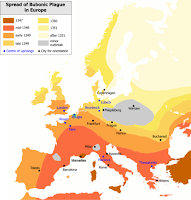 and feared the "looming" Bird Flu pandemic. The high level of contagiousness of this disease made the "slow growth phase" pretty much non-existent, and pretty much just skipped straight to the "explosive phase (p.172)." Luckily, unlike his example of *shudder* the Ebola virus, the Swine Flu does not guarantee death, but because of this, it does not reach the "burn out" phase quite as fast. If God forbid, something like the Ebola virus did break out in the United States, or any highly populated area, it could be devastating, like the plague, but faster. According to Watts, the only people who are "safe" from an outbreak are those who have been "removed", either by recovery, inoculation, or death (p. 168).
 So what do you do to control the disease? UT Dallas has this advise on the Student Health Center website:
Take these everyday steps to protect your health:
- Cover your nose and mouth with a tissue when you cough or sneeze. Throw the tissue in the trash after you use it.
- Wash your hands often with soap and water, especially after you cough or sneeze. Alcohol-based hand cleaners are also effective.
- Avoid touching your eyes, nose or mouth. Germs spread this way.
- Try to avoid close contact with sick people.
- CDC recommends that people with influenza-like illness remain at home until at least 24 hours after they are free of fever (100° F [37.8°C]), or signs of a fever without the use of fever-reducing medication
Once you have contracted a virus best way to protect yourself and others is to cut yourself off from your network. This is also true for computer viruses. Once a computer is infected with a virus, it should be cut off from the network until the virus has been eliminated.
But what about the massive power outages or factory breakdowns Watts discusses? In the situation of the power outages, cutting off "infected" areas by the automatic breaker system, which was supposed to protect the system actually ended up making the situation worse, by rerouting power to other branches of the system and overwhelming them to the point of overload and meltdown. Sometimes cutting off a problem area in a network is like cutting off your nose to spite your face...it does more harm than good.
The networks in our lives are very powerful, but also very fragile tools. The same chain or group of people that can help you get a new job or introduce you to your future spouse can also spread hurtful gossip or expose you to the swine flu. So wash your hands and be careful who you defriend, you never know how it can affect you down the line.
Monday, November 9, 2009
If you're not on MySpace (or Facebook), you don't exist.

In 2005 , at the age of 23, I finally gave into peer pressure and joined Facebook, "only to look at pictures." Now, 4 years later, it is the main mode of communication between many of my friends and me. A lot has changed in those 4 years. For example, I when I joined, Facebook was only for people with college email addresses, and only certain colleges were included. I was slightly troubled when High Schoolers were allowed to join, but utterly dismayed when it was opened up to everybody. Especially when my parents (and in-laws) started to join! Although I am an adult, married, financially independent, and really not very scandalous, there are things on Facebook that I do not need or want my parents (and later my boss) to see. Because of this, I had to use lots of privacy setting on them. Most of the stuff I don't want certain people to see is pictures and comments that other friends post, what danah boyd, in her dissertation, calls "co-constructed"(p. 136) material on my profile. Other things are lived out loud and publicly. As soon as my husband and I got engaged, we rushed home, and "made it official" on Facebook. All of this is to say that although I am not and have never been a teenager on Facebook (or MySpace), I can still easily relate to many teens' situations involving social media and adults.
Social media sites are places to connect (or reconnect) with friends. They are a place to hang out with friends you don't see very often and to continue conversations with friends you see all the time. And to share with both. Like I said earlier, I joined Facebook solely to look at and share pictures with my friends (specifically, pictures of a cruise we had just been on), but soon after joining, I was hooked, refining my profile, and checking others' to see what they were doing. Like boyd's teens, I didn't want to let my profile get stale, because I thought this would leave a bad impression (p. 141). But then, like some of the other teens, I decided too much activity gave the impression that I have no life (whether or not this is actually true), and I stopped updating as much.
I refused (and still refuse) to join MySpace for several reasons, legitimate or not. First, because everyone else was dong it, and I was "too cool" (p.194). Second, (whether this is fair or not) I felt that MySpace was for the less educated (p.202). Third, I felt that Facebook and MySpace serve the same social function, and so once I was on Facebook, I didn't feel the need to join MySpace (p.198). And fourth, I did not want to have to pick my "Top Friends" (p.222), bridesmaids were hard enough!
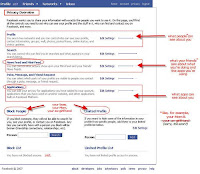
Although my husband and I are technically grown, independent adults, we still have some of the same teen fears and power struggles with our families, and these are reflected in the way we interact with them on Facebook. Both of us have our parents on the "Limited Profile" view on our Facebook accounts. For me, this means that they can't see pictures that friends have tagged me in and they can't see groups that I have joined or certain applications that I have on my profile. Why? Because our parents still feel the need to confront us and reprimand us on lifestyle choices that they don't agree with. For example, about a year ago, my husband (who was 25 at the time) posted a comment on a friend's wall, referencing drinking wine. At the next family gathering, his dad pulled us aside to ask us if we drink from time to time, and to warn us about it. Even in our mid twenties, we still have to worry about our parents (and extended families) "misunderstanding (p.165) " and "not giving us enough credit (p.247)."
So, what makes a twenty something different from a teen, when it comes to social media and the way it effects our lives, and vice versa? Not much, except for actual society and parent's power over them. As much as I hide certain things from my parents and other "adults" in my life, the main motivation is to avoid embarrassment and awkward situations. Teens, on the other hand, have to deal with punishments varying from grounding all the way up the scale. According to boyd, adults seek to restrict teens' actions (both online and offline), because they are afraid of and for them. "Teenagers are alternately viewed by adult society as a nuisance who must be restricted or an impressionable population who mist be protected; they are both deviant and vulnerable (p. 242)." Parents and schools can control whether a teen has easy access to the internet, which parts, and for how long. Both can punish a teen for "private" material posted on social media sites, like the two girls I mentioned last week (p.261). Although many of us may have bosses or workplaces that don't understand or don't subscribe to social media, much less allow it in the work place, were are still free to use it at home. Although we may not have the time or take the opportunity, as adults we are allowed to go out at all hours to hang out with our friends in public places. Not so for teens, who have curfews, anti-loitering laws, and other restrictions placed on when and where they can hang out with their friends. In many cases, social media sites have replaced the mall and parks as the place to hang out with friends for many teens (p.277). So teens live out their private lives in the "public" realm of the internet, knowing that others can look in, but focusing on their friends.A lot has changed in the 13.5 years since I was 13.5, but one thing has stayed the same; teens need a place to hang out with their friends, in a social setting, away from school, and as society changes, so will the places they find to congregate. Adults and teens aren't that different, but in many ways, they are miles apart.
Sunday, November 1, 2009
Visibly Invisible

When I was 13 years old, I got on my Dad's computer and found my way into a chat room online. I met people online who would immediately message me "a/s/l" for "Age/Sex/Location," and I realized that online, I could be anything I wanted to be. Of course, as a 13 year old girl, what I wanted to be was a 16 year old girl, which nearly got me in trouble with some gross online stalkers who wanted to meet me in real life.
I've heard more than one story from friends meeting someone from a dating site, only to find out that they were not exactly "as advertised."
The point is, that online, people can be anything that they want to be. And they often are. They can be a different age, sex, race, religion, nationality, etc. all with a little bit of imagination and typing. Lisa Nakamura found that "when [online] users are free to choose their own race, all were assumed to be white. And many of those who adapted non-white personae turned out to be white male users (p. 391)."
According Lisa Nakamura in cybertyping and The Work of Race in the Age of Digital Reproduction, the phenomenon of stereotyping has made its way online into what she calls "cybertyping." Specifically, the word cybertype describes "the distinctive ways that the Internet propagates, disseminates, and commodifies images of race and racism (p.318)." In theory, the Internet could and should be a place above and beyond race and gender. However, in reality, this has ended up not being the case. Even when race and gender are not specified online, white male is almost always assumed. "One of the symptoms of cybertyping is this convenient 'disappearance of awareness' of American racial minorities, a symptom that 'multiculturalist' Internet advertising and the discourse of technology work hard to produce (p. 327)." If a certain race is not shoved in our faces, most Americans will not see or think about it, especially online, where that person is not easily seen.
The irony of this is that in today's society we are seen by more cameras and observers than ever before. If you go out in public you can bet that you will be seen by at least one camera. If you run a red light or a tollbooth, you may be sent a picture of yourself in the mail. We are living in a version of Bentham's Panopticon or even Orwell's Big Brother society. Whether or not we are actually being observed at any particular time, there is a chance that we are. Under the Patriot Act, the government can even check our emails and phone calls if they think we may be doing something illegal. At the end of his essay, Discipline and Punish, Foucoult asks, "Is it surprising that prisons resemble factories, schools, barracks, hospitals, which all resemble prisons? (p.486)" The regimented, disciplined, observed way of life, which started in government and prisons has now come to dominate other institutions which effect our daily lives.
Has this quest for discipline and observation reached into our homes though the internet? I have already suggested that the government can monitor communications if it thinks that you are a terrorist, but what about more daily regiments online for the "regular" user?
On the way home from work the other day, I heard a familiar story. A couple of teenage girls took some provocative pictures over Summer break and put them on their MySpace pages. Someone at the school started passing the pictures around, and now the girls are suspended from participation in sports and have to make a public apology. These girls did something (questionable or not) on their own time in their own homes, but the act of putting pictures of the event online made them a part of the public system and subject to its rules. The sports team at those girls' school has rules about behavior both inside and outside of the classroom. Their actions became known and punishable because of the publicness of people's lives now on the internet. The system can now reach into our lives like never before and change them for better or worse.
With all of the positive things that the internet can bring: organization, communication, digitization, and more, it is far from a perfect place. It is not accessible to everyone. The poor and many minorities have not seen the saturation that white middle class America has. But even if and when that saturation does catch up as did television, the internet may still not be as diverse or equal as people might think. "Mainstream film and television depicts African Americans in consistently negative ways despite extremely high usage rates of television by African Americans. Hence, the dubious goal of 100% 'penetration' of African American communities by Internet technologies cannot by and of itself, result in more parity or even accuracy in representations of African Americans (Nakamura, p. 330)."
Although the internet has vastly changed society in many ways, we still have a long way to go as a culture to catch up in racial equality and in finding a balance of power and privacy.
Monday, October 26, 2009
Here Comes Wikipedia (and Everybody Else Too)
Clay Shirky's Here Comes Everybody was by far the most enjoyable and readable book that we've read so far this semester. I would recommend it to anybody who works in the media professionally or even as a hobby. I may even find a way to recommend it to my boss!

While discussing this book with my dad at lunch on Sunday, the subject of Wikipedia came up. Not surprising, since Shirky uses it as a prevalent example of the possibilities of organizing people over the Internet. My dad, of course, is one of the Wikipedia nay-sayers, who is convinced that something that can be edited by anybody can not be relied on to be correct in any way. He pointed to the article on Barack Obama, which months before the election already said that he was the 44th president of the United States. This may have been true, but if he had check in the next day, the incorrect information would probably have already been fixed. My dad would have probably preferred the failed Nupedia, which relied on academic experts donating their time to create articles which were highly regulated and had to go through several approval levels before being published (p.111). Although, had the website survived, these articles would have been more academically accepted, there would have been much fewer of them, and they would never be as up to date as the existing Wikipedia, which can be updated as events are happening.
The amazing thing about Wikipedia and other sites like it is not just that it exists, but that it functions, and functions well. The fact that people are willing to come together and work on an encyclopedia for free, and that it is actually correct most of the time is the truly amazing thing. Or is it? According the Shirky, this type of behavior is popping up all over the net. From collaborative programmers creating Linux to long lost friends finding each-other and planning reunions, people who may have never worked together are now cooperating to create things.
The reason people are doing this (get ready for an Economics word) is because the transaction cost has been greatly lowered (p.47). Things that used to be so prohibitively expensive or inconvenient that they were barely, if ever, considered possible are now as simple as a click of a button.
Prior to the Internet, especially Facebook, I probably would have never stayed in contact with many (if any) high school or college friends. Now, I know what they are up to, and can share in their life changes (so many babies!!) and coordinate meeting up with them when they are in town with nearly effortless ease. My 5 year college reunion is coming up in a few weeks, and although I'm excited about seeing everyone, I kind of already know what's going on in their lives. What I'm really exited to do, is to finally meet all of those husbands and babies I've seen pictures of and to see Kelly's new hair cut in real life. No matter that I have not seen or technically talked to most of these people since graduation, I still feel like I am part of their lives. Because of this type of connection, a group of my friends have been able to coordinate an informal reunion during the official reunion weekend.
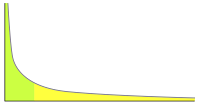
Of course, as Shirky points out, participation in this coordination is not in any way equal. There are 1 or 2 people who have been doing the majority of the discussion and preparation on the email list, while the majority of people have only stated whether or not they will be able to attend. This is what Shirky refers to (Economic word again) as the power law distribution. " A power law describes data in which the nth position has 1/nth of the first position's rank (p.125)," and it seems to be in effect for any participation/coordination/creation that goes on on the web. For example, the vast majority of Wikipedia users end their participation at that; using. A small percentage of users do end up for one reason or another) becoming contributors. The vast majority of these contributors end up (like myself) only making one edit to one article. A small percentage of those contributors make more than one edit, and as the amount of edits goes up, the amount of contributors making those edits goes down exponentially, resulting in a fraction of a percentage of people being responsible for the vast majority of the work.
This is also referred to as the 80/20 rule, meaning that 20% of the participants count for 80% of the work. This statistic would never fly in the corporate (or any paying) world, but it works on the web, because the transaction cost is so low. People are working for free, because they want to. And other people's work, or lack of work is not taking away from the work that they have done. The ones doing the most work (like the people organizing our informal reunion) are the ones who care the most, and the ones who participate the least are the ones that have the least time/interest, but still want to be a part. Shirky contends that social media provides for both types of users, and everyone in between, thus creating a place where everyone can participate in the way that they are most willing/able, and in doing so, they can create things/possibilities that were never before conceivable.
Wikipedia works against all odds, because people care enough to make sure that it does. The same thing applies to any of thousands (or maybe millions) of other collaborative Internet sites, because of love. Not the squishy kind of love, but the passionate kind of love. Social media opens up doors to success (and even more failure) that allow people to explore and pursue their passions in ways they have not been able to do before. What doors has it opened for you?
Subscribe to:
Posts (Atom)